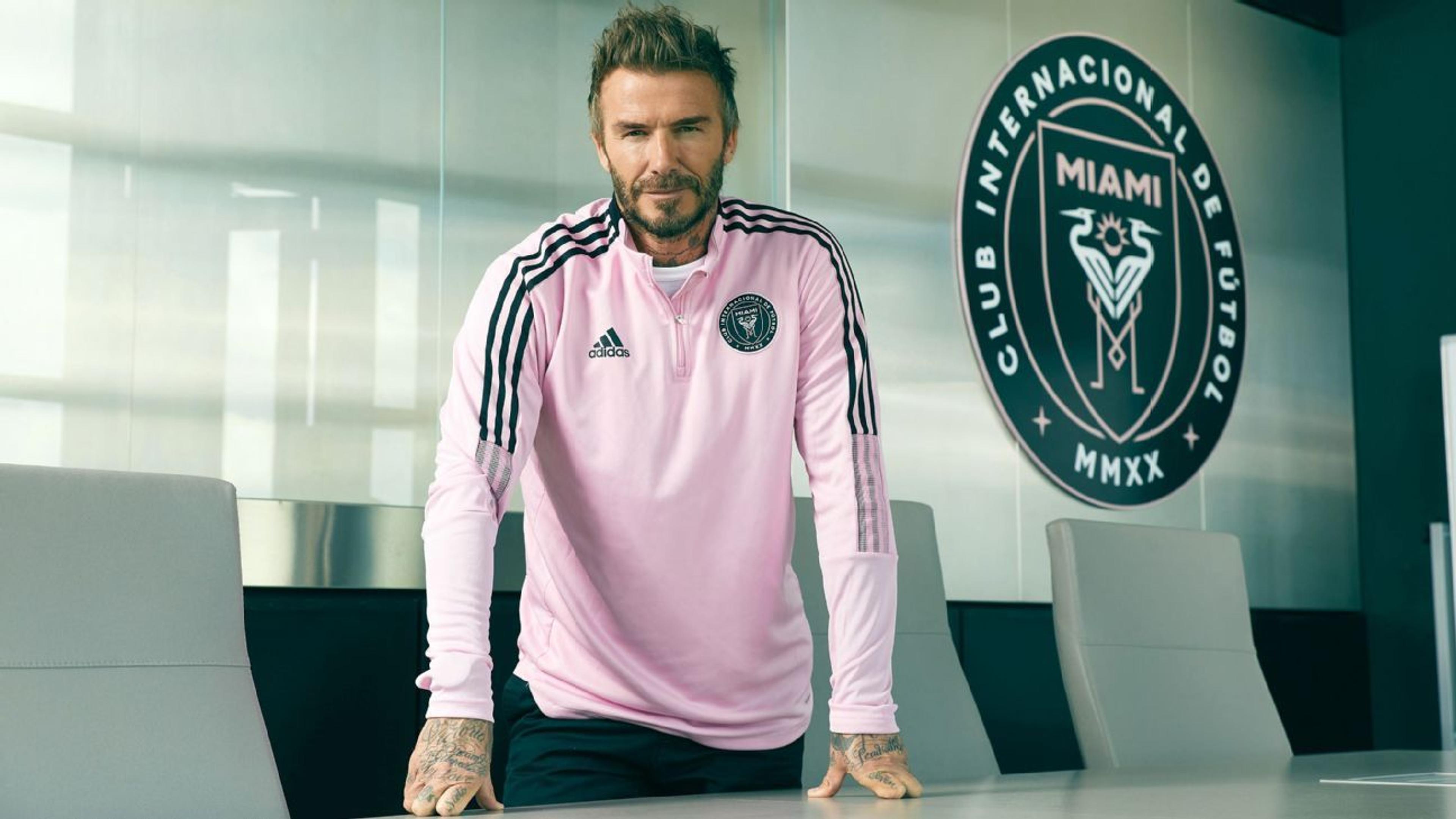
There are football transfers that change a team, transfers that change a league, and transfers that quietly change the life of the player making them. David Beckham’s move from Real Madrid to LA Galaxy in 2007 belongs to all three categories. At first, though, it did not look like a masterstroke. It looked like the kind of move that made European supporters shake their heads and say the same thing they always say when a famous footballer heads to America: he is finished.
Beckham was 31 years old. He was not a nostalgic name being brought in to sell a few shirts at the end of a career. He had played for Manchester United and Real Madrid, two of football’s great institutions. He had won league titles in England and Spain. He was still an England international, still capable of placing a cross on a teammate’s head from an absurd distance, still the kind of player who could turn a free-kick into a private moment between himself and the ball. His celebrity was enormous, but it had not replaced his football. Beckham still mattered.
That was why Los Angeles felt confusing. To leave the Bernabéu for MLS in 2007 seemed, from the outside, like choosing sunshine over sporting relevance. The move came with the familiar headlines: Hollywood, Victoria Beckham, celebrity culture, sponsorship deals, America, the belief that the league had bought a global name rather than a footballer. Even the language around it felt slightly dismissive. Beckham was not “joining a project.” He was “going to America.”
But that interpretation missed what Beckham and the people around him had seen.
"His move to LA Galaxy was not only a final chapter. It was an investment in the next one."
Inside the deal was a reported right for Beckham to acquire an MLS expansion franchise for a fixed $25 million after his playing career. The full contract itself has never been placed on a table for supporters to read, so the exact legal wording should not be romanticised beyond what has been publicly reported. But the principle is clear enough: Beckham did not only negotiate for his salary, image rights and commercial opportunities in Los Angeles. He negotiated an option on the future of the league.
More than a decade later, that option became Inter Miami.
The story matters because it is not simply about a famous man getting richer. It is about understanding value before the rest of the market sees it clearly. It is about knowing that a football contract can be more than an agreement to play ninety minutes each weekend. And it is about the long, frustrating, deeply unglamorous work required to turn a clever clause into a real club with a city behind it.
When MLS still needed to be believed
The modern picture of MLS can be misleading. Today, the league has global stars, ambitious stadium projects, rising franchise values, Apple’s worldwide streaming partnership, increasingly sophisticated academies and cities competing to be part of its next expansion round. Lionel Messi plays there. The 2026 World Cup has made North America central to football’s calendar. It is easy to assume MLS was always marching toward this moment.
It was not.
In 2007, MLS was stable but still fighting for legitimacy. The league had survived its uncertain early years and learned from some of its original mistakes. It had become more cautious with spending, more focused on soccer-specific stadiums and more disciplined about growth. But in the global football imagination, MLS remained peripheral. European supporters noticed it when a famous player moved there, then went back to discussing the Premier League, Serie A, La Liga or the Champions League.
The league needed attention, but it also needed credibility. It needed proof that one of football’s most recognisable figures could choose America while he was still a serious player. Beckham gave it that proof.
His arrival also pushed MLS to make a structural adjustment. The league introduced the Designated Player mechanism, allowing clubs to sign players whose salaries exceeded the normal budget rules. It became known as the Beckham Rule, not because Beckham invented it alone, but because the league’s need to accommodate him made the change unavoidable. That mechanism would later help MLS attract players such as Thierry Henry, Robbie Keane, Zlatan Ibrahimović, Kaká, Wayne Rooney and, eventually, Messi.
The point was bigger than one player. Beckham’s arrival helped MLS create a new category of possibility. The league was saying that it could offer something more than a quiet final stop. It could become a stage for global football names, a platform for brands, an investment opportunity and a competition willing to change its own rules when the right moment arrived.
Beckham understood the value of that moment. More importantly, his camp understood that if he was helping create that value, he should not be compensated only in the conventional way.
A football contract with a second life
Most football contracts are designed around a short horizon. A club agrees to pay a player for what he can do now. The player negotiates salary, bonuses, signing fees, loyalty payments, image rights and perhaps clauses linked to appearances or trophies. Both sides try to protect themselves from the uncertainty of form, injury and the next transfer window.
There is nothing wrong with that. Football careers are short. A player has every reason to maximise the years in which his body can earn at an elite level.
But Beckham’s Galaxy contract appears to have asked a more interesting question: what happens if this player helps make the league more valuable after he stops playing?
The reported $25 million expansion option was not a promise that Beckham would receive a club for free. It was not a magic ticket to ownership. It was a right to enter MLS as an owner at a pre-agreed price, provided he could build the ownership group, secure the location, meet the league’s requirements and make the project viable.
That distinction matters. The masterstroke was not that Beckham found a loophole. The masterstroke was that he negotiated an option.
An option is one of the most powerful ideas in business because it gives someone the right, but not the obligation, to act later. If the opportunity becomes more valuable, the option can be exercised. If the future turns out badly, the holder can choose not to use it. It allows a person to participate in upside without taking every risk immediately.
Beckham did not have to build a club in 2007. He could finish his career, watch MLS develop, understand the American market more closely, evaluate potential cities and decide whether he wanted to become an owner. The league, meanwhile, received a player whose arrival made it more commercially relevant.
It was a trade built on mutual belief.
The truth is that nobody could have known exactly what MLS would become. Beckham could not have predicted Messi in Miami. He could not have known how much the league’s franchise values would rise, how central soccer would become to American sports culture, or how the World Cup would eventually return to North America. But he could see the ingredients. America had wealth, major media companies, global cities, a growing immigrant football culture, powerful sponsors, vast commercial potential and a generation of younger supporters who were beginning to treat football as part of their identity rather than a foreign curiosity.
The market had not fully caught up with the possibility. Beckham’s deal allowed him to bet that it would.
The difference between price and value
This is where the $25 million number becomes so powerful.
In football, we hear numbers constantly. A player costs €80 million. A stadium costs €1 billion. A club is worth €4 billion. But the most important numbers are often not the largest ones. They are the numbers that reveal whether someone understood value before the market did.
The $25 million was the reported price attached to Beckham’s option. It was not the cost of building Inter Miami. It did not include the capital needed to create a club, hire staff, build a squad, develop training facilities, chase a stadium project, pay legal advisers, negotiate with local authorities, create a brand, attract sponsors or survive the years before the business became mature.
Still, it was an extraordinary price to secure the right to participate in MLS expansion.
By 2023, San Diego FC’s ownership group paid a reported $500 million expansion fee to enter MLS. The circumstances were different, and football finance should never pretend that all numbers can be compared as if they were identical. Different cities have different strategic value. Different ownership groups enter under different league conditions. Inflation, broadcast arrangements, the wider sports market and stadium plans all matter.
But the contrast tells a story. A $25 million option from the Beckham era sat in a league where a later expansion franchise reportedly cost 20 times more simply to obtain entry.
That is what foresight looks like in football business. It is not about predicting every detail. It is about recognising that an asset is being priced for the present while its real value will be determined by the future.
Beckham’s deal was not only financially intelligent because it was cheap. It was intelligent because it linked his own commercial force to the growth of MLS. He was not asking to be paid for existing value alone. He was asking for a way to share in the value he might help create.
That is a lesson far beyond football. A great product leader does not only negotiate for a role title. A founder does not only negotiate for salary. A talented executive does not only look at the first year of compensation. They ask what is being built, who will benefit if it succeeds, and whether they have a meaningful place in that future.
Beckham’s Galaxy contract did exactly that.
Miami was the dream, not the guarantee
The story is often told as if Beckham finished playing, pointed at Miami, exercised the clause and watched a football club appear under the Florida sun. Reality was much harder.
Beckham retired in 2013, and the following year MLS announced his effort to establish an expansion club in Miami. The city made sense on paper. It was international, diverse, glamorous, football-aware and commercially powerful. Miami could connect North America, Latin America, Europe and the Caribbean in a way few American cities could. It was a natural home for a club that wanted to feel global from the beginning.
Yet natural does not mean easy.
Building a football club means dealing with matters that rarely appear in the announcement video: land ownership, planning permission, stadium financing, city politics, local resistance, transport, community concerns, investors, lease terms, commercial partners and the cost of getting every small decision wrong. Beckham’s group encountered years of stadium complications and failed site discussions. Miami was not waiting politely to be given a club. It had competing interests, contested land and serious questions about what a stadium development would mean for the city.
This is the part of sports management that people who only watch transfers often miss. A club is an emotional institution, but it is also an operating model. It needs a home. It needs governance. It needs people who can negotiate, finance, market, recruit, sell, listen and decide. A powerful name can open doors, but it cannot replace the boring work that allows an institution to survive once the cameras move on.
Beckham’s global profile was essential, but so were the partners who could make Miami work. Jorge Mas and the Mas family became central to the project, providing investment capacity, local business knowledge and the ability to navigate the reality of building a club in one of America’s most complicated cities. The eventual ownership story was therefore not “Beckham buys a franchise.” It was a coalition of people with different forms of power: sporting credibility, capital, local influence, real-estate knowledge and commercial ambition.
That is what made Inter Miami possible.
The club’s first MLS season arrived in 2020, seven years after Beckham retired and 13 years after he joined LA Galaxy. The time between the clever contractual clause and the first competitive match is crucial. It reminds us that a strategic opportunity is not the same thing as a finished result. A brilliant idea can still die without patience, execution and people who know how to build.
Beckham did not buy Inter Miami
This is worth saying plainly because it makes the story more accurate.
David Beckham did not buy Inter Miami as an existing club. He used his reported expansion option as part of the process of founding a new MLS franchise. Inter Miami was created through the exercise of a right, the formation of an ownership group, the selection of a city, lengthy work around stadium plans and the construction of a football operation from the ground up.
That distinction gives the story its real weight.
Buying a club is one kind of ambition. You inherit a fanbase, a history, a stadium arrangement, a squad, commercial relationships and, often, problems you did not create. Founding a club is another. You are not only buying football. You are creating a brand, a culture, a narrative and a reason for people to care.
Inter Miami had to decide what it wanted to represent before it had trophies or history. The pink and black identity, the herons, the name, the Miami connection, the bilingual energy of the city, the appeal to Latin American football culture and the desire to look international from day one were all part of that process. The club needed to be more than an MLS expansion team. It needed to feel like Miami.
That was not easy. Expansion clubs are judged immediately, often unfairly. Supporters want a team they can be proud of. Media want a story. Sponsors want visibility. The league wants growth. Owners want long-term value. Players want a credible sporting project. The club has to build all of this while competing against teams with years of local connection.
Inter Miami’s early years contained the normal messiness of a young club: sporting inconsistency, roster decisions, coaching changes and the pressure of being permanently watched. But the ownership group never lost sight of the bigger ambition. The club was built to become a global football property, not merely a regional sports team.
That ambition would eventually bring Messi.
The Messi moment and the closing of the circle
When Lionel Messi arrived in Miami in 2023, it felt like the story had found its most obvious ending. But it was not merely a commercial coup. It was the completion of a circle that had begun with Beckham’s own move from Madrid to Los Angeles.
In 2007, Beckham was the global superstar who made MLS appear more possible. His presence signalled that the league could attract football’s biggest names. In 2023, he was no longer the player making that promise. He was one of the owners helping to convince Messi that Inter Miami, and MLS, could be the right next chapter.
There is something quietly beautiful about that transition. Beckham did not just benefit from the league’s growth. He became part of the machinery that made its next transformation possible.
Messi’s arrival changed Inter Miami’s commercial reality almost immediately. Tickets became harder to find. Sponsors paid greater attention. The club’s global audience expanded. Miami became a compulsory stop for football culture in America. The team became a vehicle for conversations about Apple, Adidas, Latin American fandom, celebrity investment, tourism, stadium development and the changing hierarchy of global football.
Forbes’ 2025 estimates placed Inter Miami’s value at around $1.2 billion, making it one of MLS’s most valuable clubs. That figure should be treated with the seriousness it deserves. A valuation is an estimate, not a pile of money in a vault. It reflects expectations about future revenue, brand power, stadium potential, media exposure and the confidence that investors have in the club’s direction.
It is also not Beckham’s personal return. He does not own the club alone. He did not build Inter Miami with $25 million and no further investment. Jorge Mas and the wider ownership group have carried major responsibility in creating the organisation. Messi’s arrival did not happen because of a single contract clause from 2007.
But the original clause made Beckham’s place in this story possible.
Without it, he might have been remembered in MLS as a glamorous former Galaxy player who helped raise the league’s profile. With it, he became a founder, an owner and eventually one of the people responsible for giving Messi a new football home.
That is an entirely different legacy.
What the masterstroke teaches us
The greatest football business stories are rarely about one genius decision. They are about a sequence of choices that only make sense when viewed together.
Beckham chose Los Angeles when many people assumed he should remain in Europe. He and Simon Fuller, his manager at the time, negotiated beyond the usual boundaries of a player contract. He secured a future option instead of only present compensation. He spent years pursuing Miami when stadium plans repeatedly stalled. He partnered with people who could provide the local knowledge and capital he did not possess alone. He helped build a club that could one day attract a footballer even more famous than he was.
The deal was genius not because it was effortless, but because it created the conditions for Beckham to keep playing a meaningful role after he stopped playing football.
That is the difference between a good contract and a great one. A good contract rewards you for the value you provide today. A great contract gives you a way to participate in the value you help create tomorrow.
Football is full of people who think only about the next transfer window. That is understandable; the game moves quickly, careers are fragile and a bad season can destroy years of planning. Yet the people who shape football’s future usually think in longer cycles. They think about stadiums before they are built, fanbases before they grow, media rights before they mature, academies before players emerge and cities before the club’s badge means anything to them.
Beckham saw MLS not as a place where his football life would end, but as a market where his next life could begin.
The $25 million clause was therefore not just clever financial engineering. It was a declaration of intent. It said that Beckham was willing to trade the certainty of a conventional European ending for a more complicated, more uncertain and potentially more meaningful future in America.
In football, we remember numbers because they are easy to repeat. We remember €222 million for Neymar. We remember €100 million transfer fees, £1 billion stadiums and the enormous wages attached to superstar contracts. Beckham’s $25 million matters because it tells a different kind of story.
It was not the biggest number in football.
It was simply the number attached to a future that David Beckham understood before most people did.
Research basis:
The Guardian’s account of Beckham’s MLS legacy and the reported $25m expansion option, TIME’s reporting on Beckham’s early Miami expansion effort, The Guardian’s reporting on San Diego FC’s reported $500m MLS expansion fee, and Reuters’ report on Inter Miami’s 2025 Forbes valuation.
Debriefing (0)
Add to the File