At Union Berlin, a stadium is not simply where supporters watch football. It is proof of what can happen when a club still belongs to the people who refuse to let it disappear.
There are plenty of ways to build a football stadium now. You can hire an architecture firm, announce a naming-rights partner, release a cinematic video of a glass façade, and invite executives to talk about premium hospitality. Modern football has made this process very efficient. It knows how to create venues that look impressive from the air and expensive from every angle.
Union Berlin did something rather different.
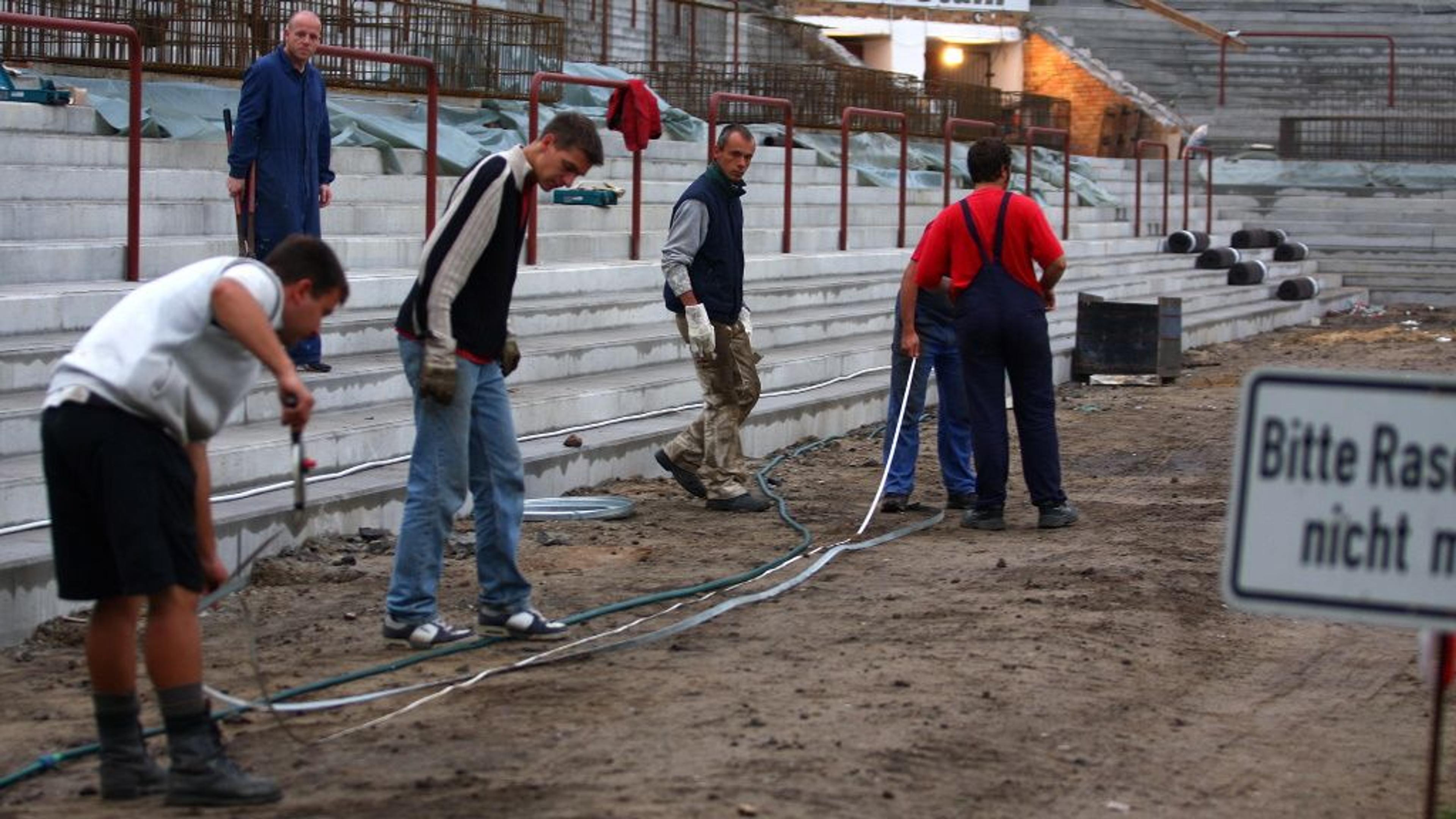
When the Stadion An der Alten Försterei needed rebuilding in 2008, more than 2,300 Union supporters volunteered around 140,000 hours of work. They did not buy the stadium in the simplistic sense. They helped build it with their time, their labour and, throughout the club’s difficult history, their willingness to give when there was little reason to expect anything back.
That is why An der Alten Försterei matters. Not because it is the biggest stadium in Berlin, or the newest, or the most commercially polished. It matters because its terraces carry a rare kind of evidence: the people who stand there helped make sure there was still something to stand in.
And that leaves Union Berlin with a question more interesting than the usual football story about promotion, survival or European nights:
"Can a club grow without turning the people who built it into customers?"
A Club from the Other Berlin
An der Alten Försterei sits in Köpenick, in south-east Berlin, far from the capital’s postcard version of itself. Its name comes from the old forester’s house nearby, which still gives the place a strange sense of having grown out of the land rather than being placed upon it.
Union’s relationship with Berlin has always been different from the more polished image of the city. The club came from the eastern half, lived through the peculiar constraints of the GDR, and developed a stubborn identity that was less about trophies than survival. There are bigger clubs, richer clubs, and more fashionable clubs in Germany. But Union has long understood something that football occasionally forgets: being meaningful to people is not the same as being successful in the conventional sense.
That meaning was tested repeatedly. In 2004, when Union faced another financial crisis, supporters launched the Bleed for Union campaign. Fans donated blood to hospitals and gave the compensation they received back to the club. It is one of those stories that sounds almost too symbolic to be true, which is perhaps why it captures Union so well. The club was not kept alive by a distant benefactor arriving with a cheque. Its supporters gave something of themselves because they believed the club belonged to them.
Four years later, the stadium became the next emergency.
The old terraces were in poor condition, and the club risked losing its licence if it could not make the ground fit for purpose. Union needed a rebuild. What it had, beyond money, was a community willing to work.
140,000 Hours of Belonging
It is easy to make this sound romantic. A working-class club, loyal supporters, old terraces, everyone united by football. But the truth is more practical and, because of that, more meaningful.
Stadiums are not saved by feelings alone. They require planning, materials, engineers, permits, safety standards and money. They require people willing to spend weekends doing work that will not put their names on a shirt or turn them into heroes. The supporter-led rebuild of An der Alten Försterei mattered because it converted affection into responsibility.
That is the difference between saying “this is our club” and proving it.
More than 2,300 volunteers contributed to the renovation between 2008 and 2009. Together, they gave around 140,000 working hours. When the rebuilt stadium reopened, it was not simply a better venue. It was a home that had been returned to the people who feared losing it.
Football loves the phrase “the twelfth man,” usually as a convenient compliment for a loud crowd. Union Berlin makes the phrase feel insufficient. Their supporters were not only behind the team. They were part of the club’s infrastructure.
There is a reason the stadium still feels different. An der Alten Försterei remains overwhelmingly a standing ground, with 18,395 standing places and only 3,617 seats within its current capacity of 22,012. That detail is not merely about nostalgia. Standing changes the social experience of football. It is harder to watch the match as an isolated consumer when you are part of a crowd that sings, moves, complains, celebrates and remembers together.
The atmosphere is not designed. It is inherited.
Football Without the Customer Service Voice
Most major clubs now speak to supporters in the language of a consumer brand. They offer experiences, memberships, access, content, packages and loyalty programmes. None of those things are automatically bad. Football clubs need money, and supporters deserve decent facilities, safe grounds and professional organisation.
But the language reveals something. It can make the supporter feel like the club’s most valuable customer rather than one of its owners in the emotional sense.
Union’s culture has resisted that idea because its people have repeatedly been asked to do more than buy a ticket. They have donated blood. They have rebuilt terraces. They have bought shares in the stadium operating company. In 2011, Union created that company to give members and sponsors the opportunity to own a stake in the stadium. A further share release in 2024 extended that relationship to a much larger Union community.
This does not mean Union has found a perfect alternative to modern football. No club can survive outside economics, and no member-led structure eliminates disagreement or difficult decisions. But it does give the club a different starting point. When Union talks about community, it is not asking supporters to feel involved. It is acknowledging that they already are.
That is a much more demanding form of belonging.
The Problem with a Happy Ending
The most difficult moment in a football story usually comes after the club gets what it wanted.
Union reached the Bundesliga for the first time in 2019. Then came European football, and eventually the Champions League. The club that had spent decades on the margins of German football was suddenly visible to everyone. Its membership grew. Its women’s team began drawing remarkable crowds of its own. The stadium, once threatened by decay, is now too small for the ambition and demand around it.
Union plans to expand An der Alten Försterei, with the first phase intended to create capacity for 37,500 people. The club has also acquired the stadium grounds, securing a level of control that would have once seemed distant.
This is good news. A club should not be trapped inside its own romantic mythology. Union supporters deserve a team capable of competing, facilities worthy of the club’s growth, and a stadium that can welcome more people into its community. Success should not belong only to clubs that were born wealthy.
Yet expansion always brings a risk. More capacity can mean more seats, more commercial areas, more expensive matchdays and a more carefully controlled version of the experience that made people fall in love with the place. A club can improve the building and accidentally weaken the culture inside it.
That is why Union’s future is more compelling than a simple stadium-development story. The question is not whether the new An der Alten Försterei will be modern. It has to be. The question is whether it will still recognise the people who carried the old one through its most difficult years.
Will the supporter who helped rebuild the terraces still feel at home in the next version of the stadium? Will the club continue to value standing room, affordability and the disorderly collective life of football? Or will success slowly turn belonging into another product to be sold back to its own people?
These are not questions unique to Union Berlin. They sit underneath almost every modern football project, from new stadiums in England to investor-led clubs in Italy, Spain and beyond. The difference is that Union cannot pretend not to know what is at stake.
"Its supporters built the evidence into the ground."
A Home Is Never Finished
Perhaps that is the real beauty of the Union Berlin story. It is not that supporters rebuilt a stadium and then preserved it forever behind glass. A football club cannot live like a museum. It has to change, make difficult choices and occasionally become bigger than the people who first carried it.
The challenge is remembering where that growth came from.
An der Alten Försterei was opened in 1920. It has been altered many times since. Its floodlights came later, its terraces were rebuilt, its main stand was added, and another expansion now waits ahead. But its most important reconstruction was not architectural. It was moral.
In 2008, Union Berlin’s supporters showed that a stadium could still be more than an asset on a balance sheet. They showed that football’s loudest claim that clubs belong to their people could mean something practical.
A modern stadium can be bought, branded and opened with fireworks. A home has to be built more slowly.
Sometimes, by the people who refuse to let it disappear.
Research basis: Union Berlin’s official stadium history and BBC Sport’s reporting on the supporter-led rebuild and club culture.
Debriefing (0)
Add to the File