
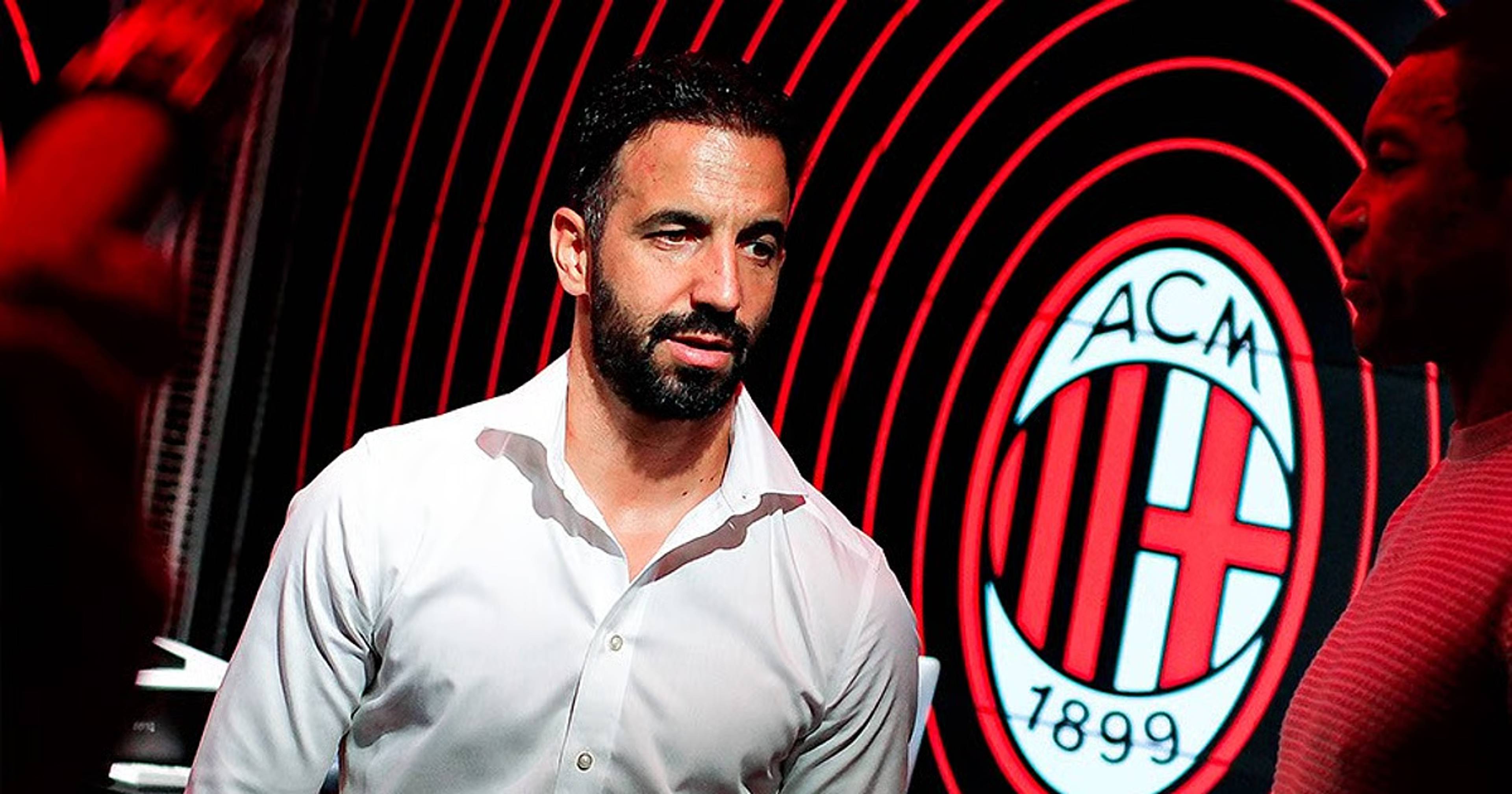
The system that restored Sporting became a burden at Manchester United. At AC Milan, Amorim is trying to prove that he can evolve without losing himself.
I have always been drawn to coaches whose football has an unmistakable geometry. Guardiola has his positional grid, Conte his rehearsed automatisms and Bielsa his man-to-man intensity. For most of his young managerial career, Rúben Amorim had his back three, two wing-backs, two midfielders and two narrow attackers behind a striker.
That structure became so closely associated with Amorim that it was difficult to separate the coach from the formation. At Sporting CP, it looked like conviction. At Manchester United, it increasingly looked like obsession. Now, after watching his first six Serie A matches and two Europa League games with AC Milan, I expected to write about another attempt to install the same system. Instead, I found something far more interesting: a coach arguing with his own past.
In Manchester, Amorim was criticised for refusing to abandon his back three. By the end, even a brief and successful experiment with a back four could not persuade him to leave it behind permanently. Nine months after losing that job, he stood on the touchline in Salzburg and watched Milan win 4–0 with four defenders and two forwards. The result was important. What it represented may prove even more significant.
Rúben Amorim had changed.
/A Career Moving Faster Than Experience
Amorim did not spend decades slowly moving through academies and assistant roles. After retiring as a player at 32, he began coaching Casa Pia in Portugal’s third tier in 2018. He moved to Braga B the following year, was promoted to Braga’s senior team in December 2019 and immediately began winning. In only 13 matches, he recorded ten victories, defeated Benfica away for the first time in 65 years and lifted the Portuguese League Cup.[1]
Sporting had seen enough. In March 2020, the club paid approximately €10 million to release a coach who had barely completed three months in senior professional management.[2] It was an extraordinary gamble for a club already living with financial pressure, political instability and almost two decades without a league title.
The gamble worked because Amorim gave Sporting something more valuable than a fashionable formation: he gave them coherence. His 3-4-2-1 connected recruitment, player development and match strategy. The wing-backs provided width, the two attacking midfielders moved into the inside channels, and the back three allowed Sporting to circulate possession while remaining protected against transitions. Every position came with a clear purpose.
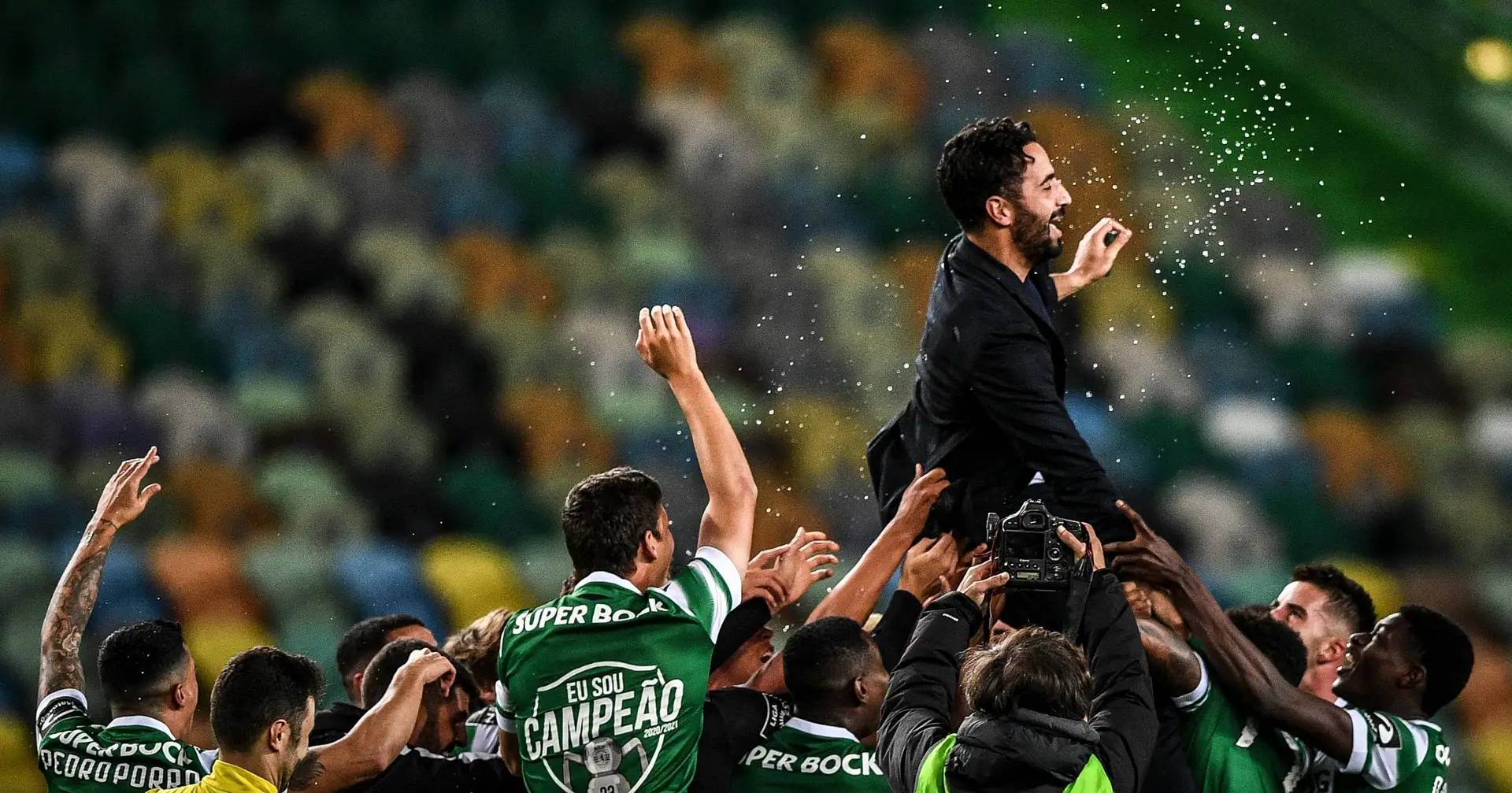
Young players also knew age would not prevent them from receiving responsibility. Nuno Mendes became a first-choice wing-back at 18, while Pedro Porro, João Palhinha, Matheus Nunes, Manuel Ugarte and Pedro Gonçalves developed into important players and valuable assets. Later, Viktor Gyökeres became one of Europe’s most productive strikers inside the same structure.[3]
In 2020/21, Sporting won their first league championship in 19 years. They took the lead in the sixth round and never surrendered it, setting a club record of 32 top-flight matches unbeaten along the way. Three years later, Amorim won the league again, confirming that the first title was more than a romantic interruption to the traditional Portuguese order.
His greatest achievement was organisational. Sporting knew how they wanted to play, which profiles to recruit and how young players could progress. Amorim gave the football operation a common language.
That success made his certainty feel completely rational. When a system ends a 19-year drought, why would its creator doubt it?
/When a Principle Becomes a Personality
Every elite coach needs conviction. Amorim’s self-belief helped persuade Sporting’s players that they could challenge Benfica and Porto. His clarity reduced hesitation and turned tactical instruction into collective belief. The problem begins when a successful idea becomes part of the coach’s identity. Changing it then feels less like solving a football problem and more like admitting the original belief was wrong.
There is a decisive difference between a principle and a formation. Principles explain what a team wants to accomplish: create superiority during build-up, occupy the width, find players between the lines, recover the ball quickly and protect the centre. A formation is only one way to achieve those objectives.
At Sporting, Amorim’s principles and preferred formation supported each other. The club recruited players for defined functions, while years of training allowed the movements to become natural. At Manchester United, he inherited a squad assembled by several managers for several different versions of football. The problem was therefore different, but Amorim initially offered the same answer.
/Manchester United and the Cost of Certainty
Manchester United appointed Amorim in November 2024 after paying another release clause, this time approximately €11 million. The club described him as one of Europe’s most exciting young coaches, and Amorim arrived with the confidence of a man who believed he was exactly where he belonged.[6]
The attraction was understandable. United had spent years moving between managerial styles without developing a stable football identity. Amorim had created precisely that at Sporting. But importing an identity midway through a season was different from constructing one over several transfer windows. United lacked natural wing-backs, several attackers competed for narrow positions and Bruno Fernandes was sometimes required to operate deeper.
Results deteriorated, but Amorim treated consistency as part of the solution. Abandoning the structure under pressure would, in his view, weaken the authority required to build something lasting. By September 2025, his defence of the system had produced the line that would define the stubbornness surrounding him: not even the Pope could make him change it.
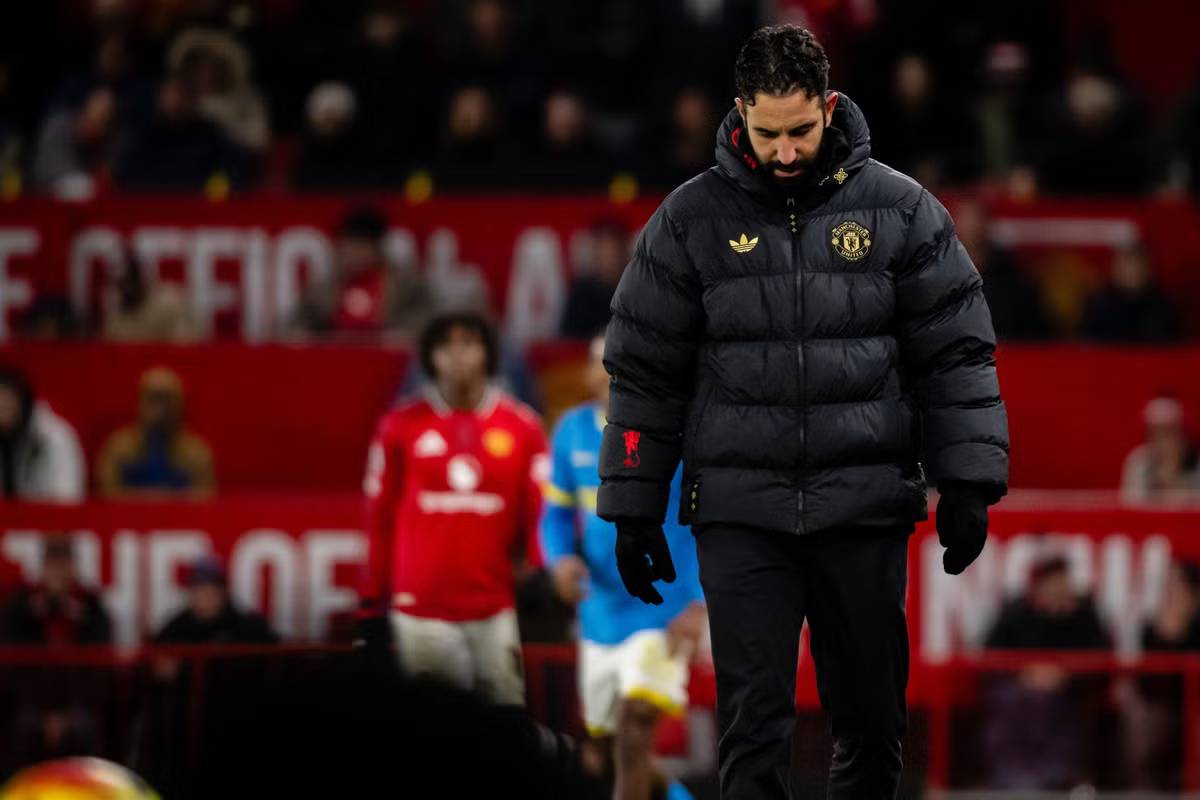
There was logic beneath the defiance. If a manager changes his fundamental idea every time results turn, the team never develops anything. Yet persistence only remains a virtue while evidence suggests the idea is moving the team forward. Otherwise, conviction begins to protect the coach rather than help the players.
United finished 15th in Amorim’s first season, although they reached the Europa League final. They had recovered to sixth when he was dismissed in January 2026.[8] His overall record 25 victories, 15 draws and 23 defeats was neither the expected revolution nor quite the complete disaster later suggested.
The most revealing moment came shortly before his departure. Amorim finally used a back four against Newcastle United and won 1–0, but returned to the back three against Wolves.[10] He understood that adaptation would eventually be required, yet seemed determined to control when and why it happened. United had hired him to provide an identity but increasingly wanted flexibility. Amorim expected the organisation to build around his idea; the organization expected him to extract more from the existing squad. Both expectations were understandable. They were also incompatible.
/Milan and the Risk of Repeating History
When AC Milan appointed Amorim in June 2026, the parallels were difficult to ignore. Another historic club had lost its way, another squad carried the fingerprints of several plans, and another ownership group wanted modern football and young-player development. Milan had finished fifth and missed Champions League qualification.
Amorim’s reputation had changed, however. He was no longer arriving solely as the architect of Sporting’s revival. He was also the coach whose biggest opportunity had exposed the limitations of his certainty.
His first selections appeared familiar. Milan used a 3-4-2-1 through the opening five Serie A matches and remained unbeaten domestically, but their control was inconsistent. They needed second-half goals to beat Torino and Venezia, conceded late against Juventus, recovered from two down against Lazio and then lost 2–0 at home to Benfica.
The old question returned quickly: did Milan need more time to understand Amorim’s system, or did Amorim need to understand Milan’s players?
"His answer has been different from the one he gave in Manchester."
Against Sassuolo, Milan started in a 4-4-1-1. Four days later, they lined up in a 4-4-2 away to Salzburg and won 4–0. Alphadjo Cissé scored a hat-trick, Gonçalo Ramos came from the bench to score the fourth, and Milan produced their most emphatic performance of the young season.
The important change was not simply the number of defenders. Milan continued to seek width, attack the inside channels and send multiple players toward the penalty area. The principles survived even as the formation changed. That distinction was captured by Amorim himself before the Lecce match:
"“What matters to me in football is our playing principles, more than the formation.”"
Eight matches are far too few to declare that Amorim has transformed. But his decisions provide early evidence of a shift. He is varying the defensive line, moving players between roles and changing matches through substitutions rather than waiting for the original plan to vindicate him.
Milan have scored 15 goals across their first eight competitive matches, and 12 have arrived after half-time. Substitutes have scored five of them: Adrien Rabiot against Torino, Diego Moreira twice against Lazio and once against Lecce, and Ramos against Salzburg. Ardon Jashari’s late attempt also forced the own goal that secured the victory over Venezia. Amorim is still not consistently finding the correct solution from the beginning, but he has repeatedly found one during the match.
That creates another curious question. Are Milan becoming evidence of Amorim’s adaptability, or are his substitutions succeeding because his initial plans remain incomplete? At this stage, the fairest answer is both.
/What Actually Makes a Team His?
Removing the back three does not mean Amorim has abandoned his identity. His football contains ideas that can survive in several formations: creating superiority during build-up, positioning attackers between the lines, using wide players aggressively, pressing after losing possession and placing several bodies around the penalty area.
His commitment to young players has also remained intact. Cissé, only 19, has become one of the defining figures of Milan’s opening weeks. Moreira has changed matches from the bench. Amorim continues to reward players who understand the role he requires, regardless of their age or status. That was one of the foundations of his Sporting project, and it may become equally important in Milan’s reconstruction.
Amorim’s development therefore should not be measured by whether he permanently abandons 3-4-2-1. That would reduce the discussion to the same numerical obsession that followed him in Manchester. The real test is whether he can diagnose different problems without interpreting every change as a betrayal of himself.
/The Difference Between Losing a System and Finding Yourself
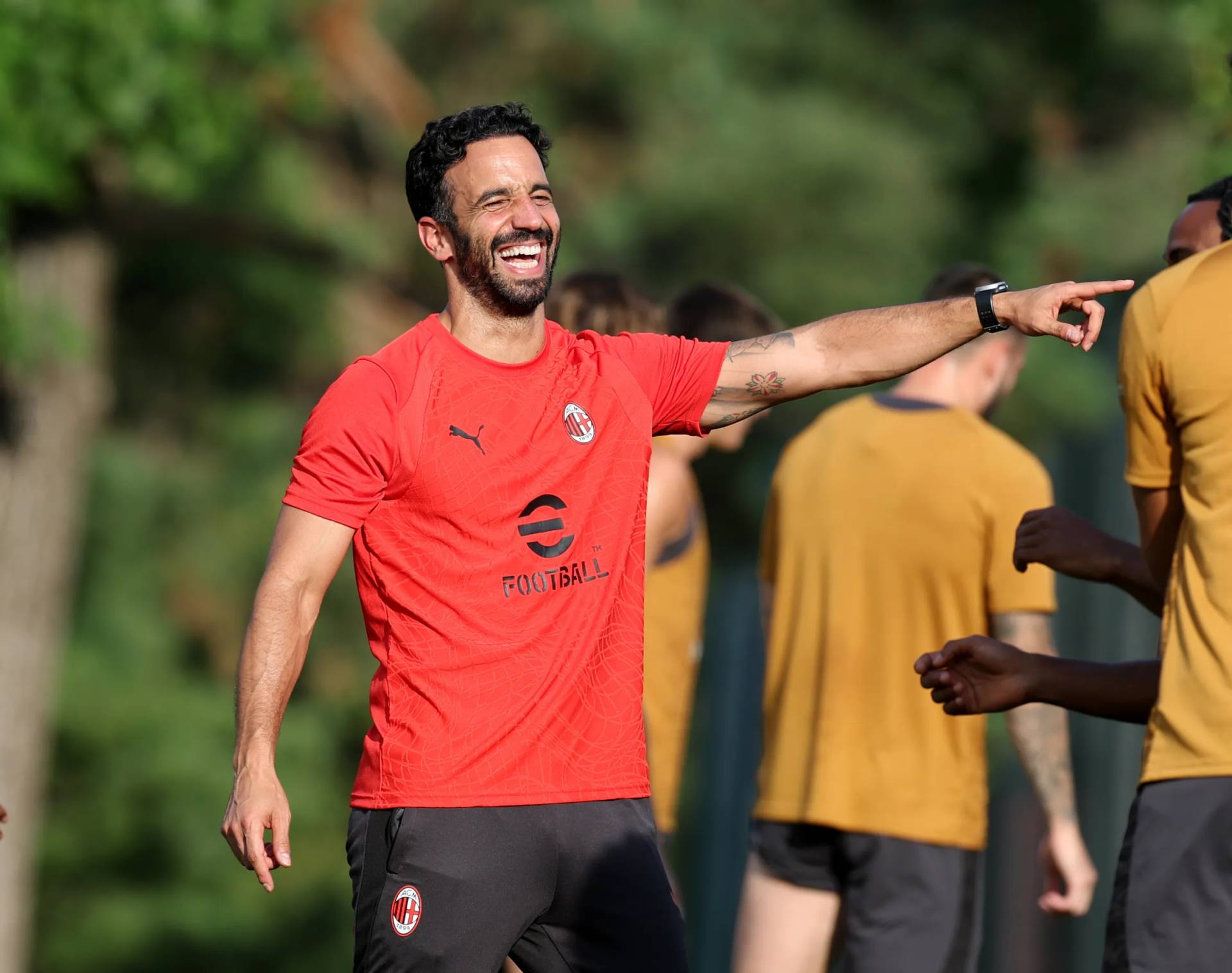
Rúben Amorim does not need Milan to prove that he can coach. Sporting already established that. What he needs Milan to prove is that he can evolve.
The greatest coaches survive because they understand which parts of their football are essential and which are negotiable. Opponents study them, players change and institutions present different constraints. Even coaches associated with strong systems must distinguish their identity from their starting formation.
Amorim’s conviction once liberated Sporting. At Manchester United, the same conviction gradually became a cage. Milan may now be teaching him that flexibility does not have to represent surrender. Sometimes changing the structure is the best way to protect the idea underneath it.
That is why his early months in Italy are more interesting than the unbeaten league record or the Salzburg victory. Certainty carried him from Portugal’s third division to some of football’s biggest dugouts before he turned 41. It also prevented him from responding quickly enough when his methods met an institution they could not immediately organise.
The curious case of Rúben Amorim is therefore not really about a back three or a back four. It is about the fragile boundary between conviction and stubbornness. One builds belief. The other closes possibilities. At Sporting, Amorim mastered the first. At Manchester United, he was consumed by the second.
"AC Milan will tell us whether he has finally learned the difference."
What did you see differently?.
Football stories become more useful when another perspective enters the room. Add yours to the conversation.

Join the conversation.
Add your perspective